Budget-Friendly Buyers Must Read! Is the Affordable Java Eco Folding Bike Worth Buying? Full Spec Comparison with Neo Revealed!
Posted by Jollymap - 2026-06-30T00:00:00.000+08:00
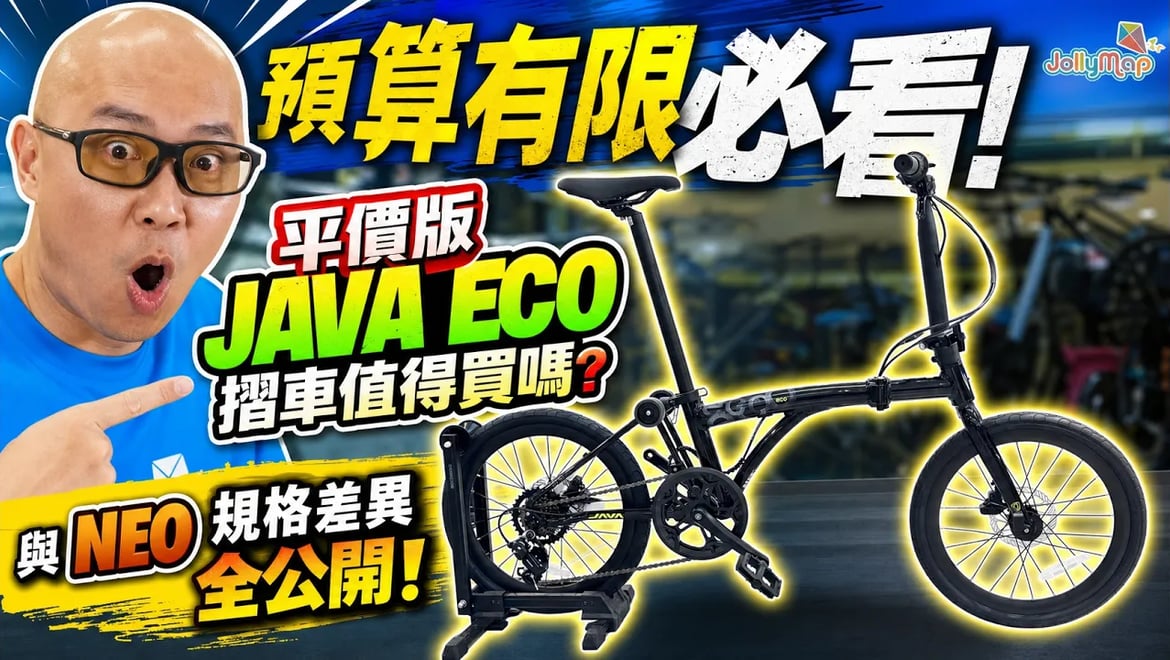
Java Eco vs Java Neo Folding Bike Full Comparison | Is a HK$2,000+ Folding Bike Worth Buying? Hong Kong Cyclist's Buying Guide
Introduction: The Folding Bike Market Reshuffles, Java Strikes Again
Hello to all Hong Kong cyclists and cycling newcomers, welcome back to Jollymap's cycling blog. Today we're diving deep into a hot topic in the cycling community — Java's newly launched Eco folding bike.
If you've been keeping an eye on the folding bike market recently, you'd know that the Java Neo caused quite a stir when it launched last year. Back then, most consumers believed a decently-equipped folding bike would cost at least HK$6,000–7,000, or even HK$8,000. But the Java Neo, priced at just over HK$3,000, slashed that figure in half — a real game-changer that captured a substantial share of the market.
However, time passes and competitors are no slouches either. The market has started seeing folding bike models priced at just over HK$2,000, directly challenging the Java Neo's high cost-performance positioning. Faced with such fierce competition, Java didn't sit idly by — instead, they went on the offensive and released a budget version of the Neo: the Java Eco, further cementing their leadership position in the folding bike market.
So what exactly are the differences between the Java Eco and the Java Neo? Is paying just over HK$2,000 really worth it? Will it cannibalize the Neo's market share and hurt Java's own sales? Today, Jollymap will break it all down for you. Whether you're a seasoned folding bike enthusiast or a cycling newcomer, by the end of this article, you'll have a clear answer.
What Is the Java Eco? In Short, It's the "Neo Lite Edition"
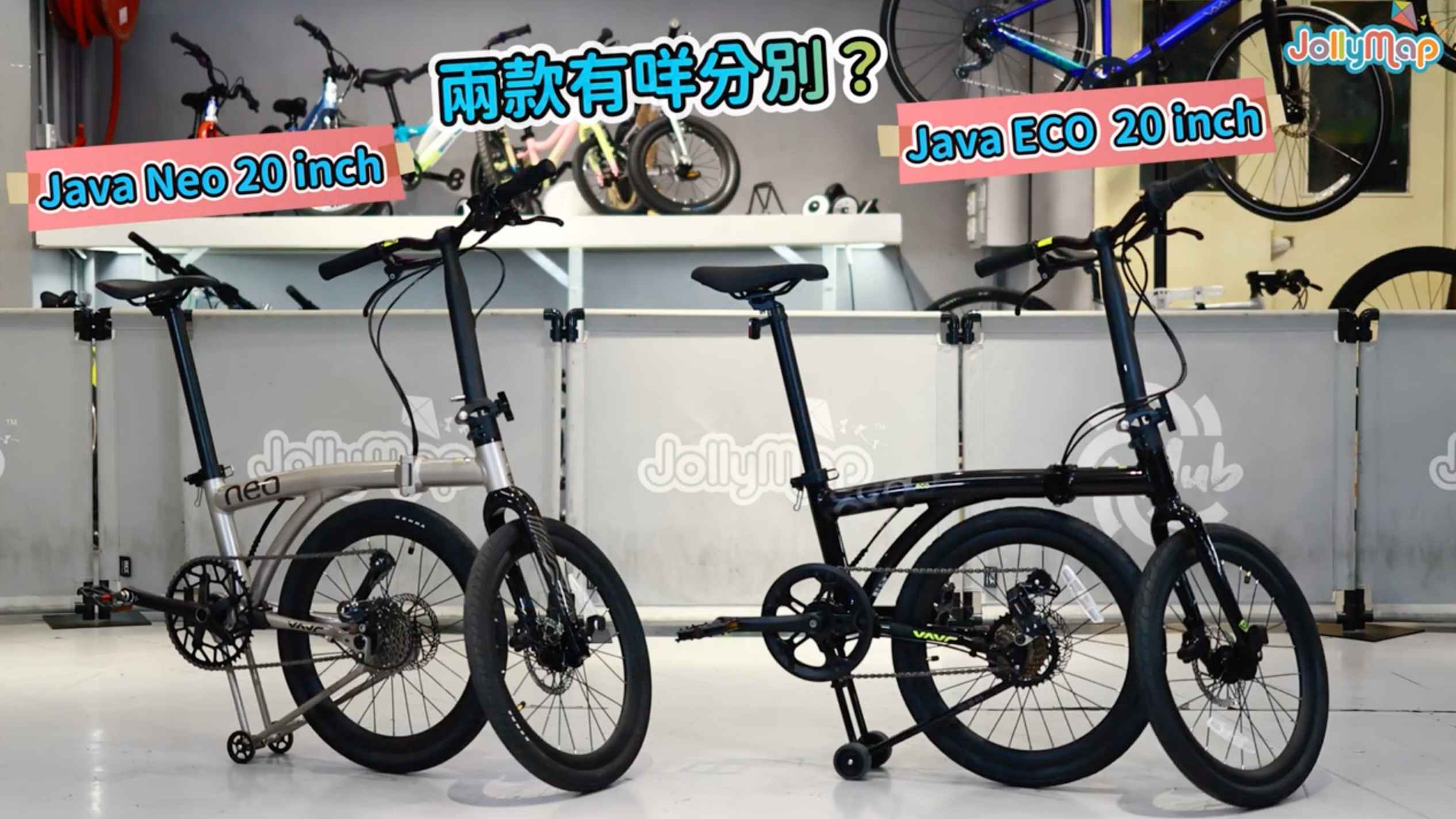
Let's start with the Java Eco's basic positioning. It's essentially the entry-level, budget version of the Java Neo — some cyclists jokingly call it the "Neo Lite Edition."
Price-wise, the Java Eco retails for just over HK$2,000 in Hong Kong — a full HK$1,000 cheaper than even the most affordable Java Neo (which starts at HK$3,000+). For those on a tight budget who still want a quality folding bike, this price is incredibly attractive.
Appearance-wise, the Java Eco only comes in a 20-inch wheel size and a single black colourway. To keep costs down, focusing on volume sales and simplifying the lineup is crucial — that's why Java has chosen not to offer multiple variations, instead concentrating their resources on perfecting one single version.
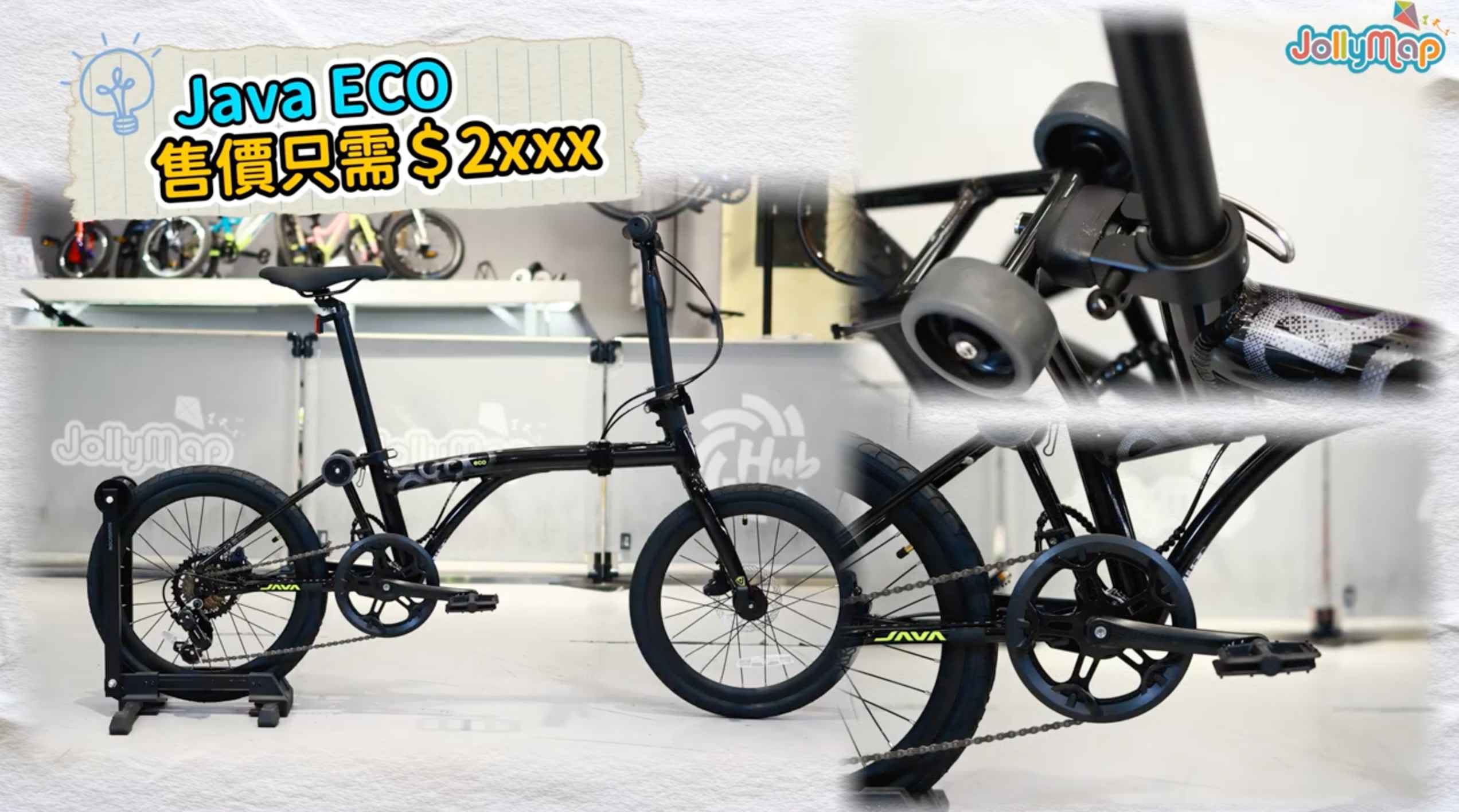

Java Eco vs Java Neo: Six Key Differences Fully Explained
1. Frame Material: Identical Core Structure to the Neo
This is one of the Java Eco's biggest selling points. Despite being the budget version, its frame, fork, head tube, and handlebars are all made from the same aluminium alloy material as the Neo.
Why is this so important? Because the frame is the soul of any bicycle — a quality frame means the bike has serious upgrade potential. That's why many cyclists are now wondering: "Why not buy the Eco at a lower price and do a full upgrade build?" Use the money saved to upgrade other components — the result might even be better. Is this approach viable? Read on to find out.
2. Drivetrain: 7-Speed vs 9-Speed — How Big Is the Difference, Really?
This is the most noticeable difference between the Eco and Neo.
Java Eco Drivetrain Specs:
- Shimano 7-speed twist-grip shifter (rotational shifter)
- 170mm square-taper crank (traditional design)
- 48T chainring
- Rear cassette: 13T – 34T
- Gear ratio range: 1.4 to 3.7

Java Neo Drivetrain Specs (for comparison):
- Shimano Cues 9-speed system (latest generation)
- Hollow BB crankset (lighter and stronger)
- 50T chainring
- Rear cassette: 11T – 40T
- Gear ratio range: 1.25 to 4.5

Quick explanation of gear ratios:
The larger the gear ratio number, the further you travel per pedal rotation (ideal for descents or high-speed flat-road riding). The smaller the gear ratio, the easier it is to pedal (ideal for climbing).
Therefore, the Java Neo's gear ratio range of 1.25 to 4.5 is wider on both ends compared to the Eco's 1.4 to 3.7 range. In other words, the Neo makes climbing easier and allows you to go faster on flat roads. For cyclists who frequently tackle hills or ride longer distances, this difference is significant.

-
Important Warning: The Eco's Cassette Has an "Upgrade Trap"
There are two technical details you absolutely need to be aware of:
-
The Java Eco's 7-speed cassette uses a "freewheel" design, while 8-speed and above wheelsets typically use a "cassette body" system — and the two are not interchangeable. This means if you want to upgrade to an 8-speed or 9-speed drivetrain, you can't just swap the cassette — you'd have to replace the entire rear wheel. That bumps up the upgrade cost significantly.
-
The Eco's 13T cog and the next cog up (24T) have a 10T gap — a large jump between gears. In practice, this means shifting up one gear can suddenly feel much lighter, and the transition isn't very smooth. Riders who value silky-smooth shifting should mentally prepare for this.
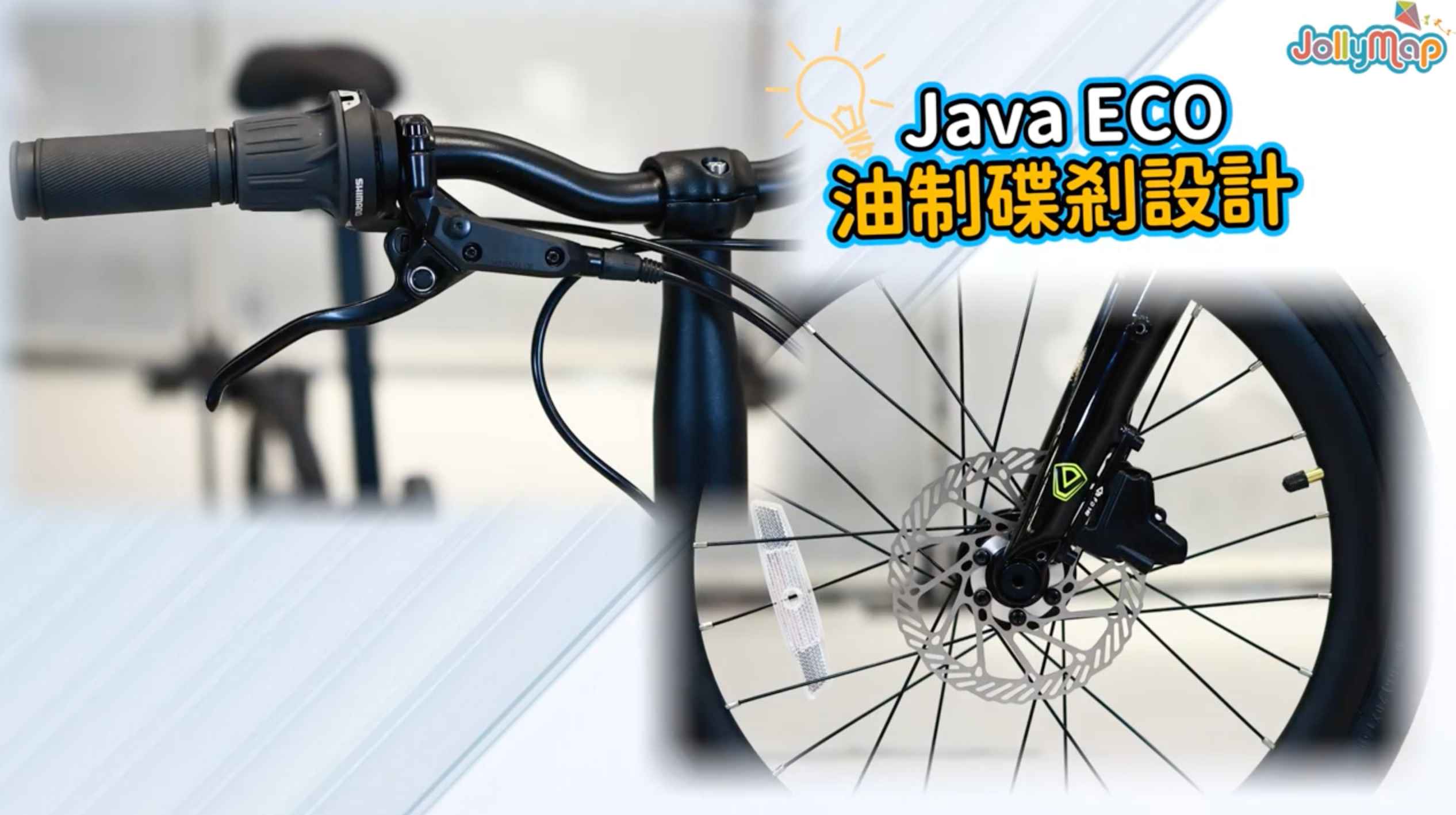
3. Brake System: Hydraulic Disc Brakes Included
When it comes to the Java Eco's genuine value, we absolutely have to mention the braking system. Despite being a HK$2,000+ bike, Java didn't cut corners — they've still equipped it with hydraulic disc brakes.
While the calipers may not look as visually striking as the CNC-machined "abalone" calipers found on the Neo electronic-shifting version, the actual braking performance is genuinely excellent. In Hong Kong's hilly, rain-prone environment, hydraulic disc brakes offer far superior stopping power and feel compared to mechanical disc brakes or V-brakes — a major safety upgrade.
Honestly, getting hydraulic disc brakes on a folding bike at the HK$2,000+ price point is incredibly generous.

4. Wheelset: A Unique Combination of Thru-Axle Front + Quick-Release Rear
Here's an interesting design choice: the Java Eco's front wheel uses a thru-axle design, but the rear wheel uses the traditional quick-release design.
This front-rear mismatch has no impact on daily riding, but cyclists looking to upgrade to carbon fibre wheels need to pay special attention. There are plenty of carbon wheelsets developed specifically for the Java Neo on the market, but before buying, you must confirm spec compatibility — don't assume that a Neo wheelset will fit straight onto an Eco.


5. Other Accessories: Cost-Saving Details
The Java Eco has clearly applied some cost control to certain details — and these also serve to deliberately differentiate it from the Neo:
| Component | Java Eco | Java Neo |
|---|---|---|
| Pedals | Plastic pedals | Single-side quick-release pedals |
| Rear suspension elastomer | All black (limited damping) | Translucent light yellow (noticeable damping) |
| Easy-roll wheels | Plastic wheels (thicker, stable rolling) | Aluminium alloy easy-roll wheels |
| Saddle | Brand-new design (comfortable test ride) | Original-spec saddle |


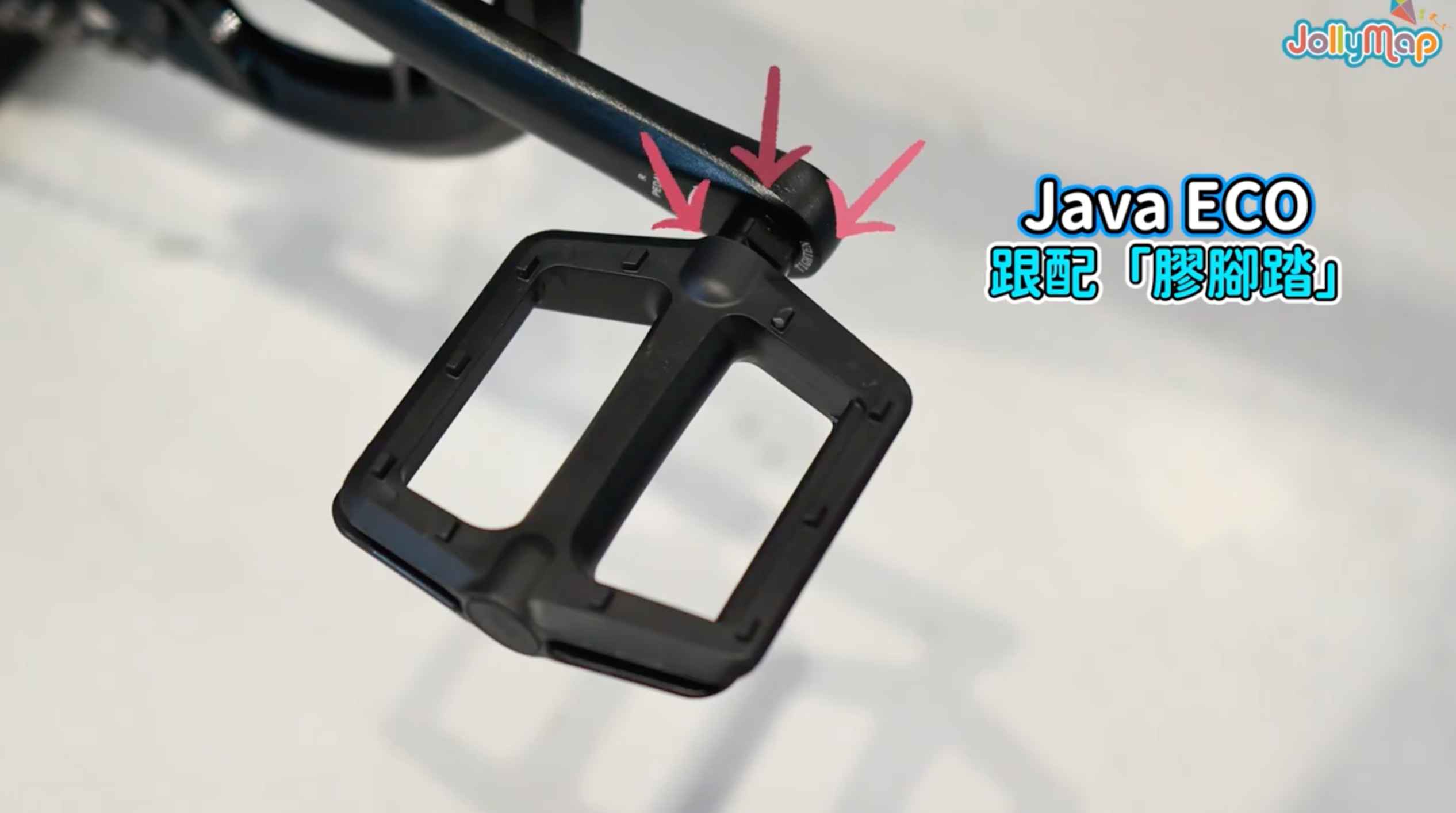

The most surprising element is the saddle. After test-riding, Jollymap found that the Java Eco's brand-new saddle is actually more comfortable than the original saddles on some Neo models — an unexpected delight.
As for the all-black rear suspension elastomer — its damping effect isn't particularly noticeable, so riders who frequently traverse bumpy roads may want to consider upgrading this down the line.

6. Weight: 11.6kg with Pedals
Jollymap's actual measurement puts the Java Eco at approximately 11.6kg with pedals included. For a HK$2,000+ 20-inch folding bike, this weight is perfectly acceptable — not exceptionally light, but absolutely reasonable.
By comparison, the Java Neo uses a higher-grade crankset and drivetrain, making it slightly lighter. But if you're on a tight budget, this 100–200 gram difference probably won't be the deciding factor.
Who Should Buy the Java Eco? Jollymap's Honest Recommendations
By now, you should have a clear understanding of the differences between the Eco and Neo. So which cyclists are best suited to picking up a Java Eco? Jollymap has summarised a few key scenarios:
✅ Strongly Recommended for the Java Eco:
- Folding bike beginners with a budget of only HK$2,000+ — At this price, an aluminium frame plus hydraulic disc brakes still offers some of the best value in the market.
- Anyone wanting to try the folding bike lifestyle — Don't want to invest too much upfront? Test the waters with an Eco and see if folding bikes are really your thing.
- Daily commuters and short-distance riders — Mostly flat roads, minimal climbing? A 7-speed setup is more than sufficient.
- Budget-conscious DIY upgrade enthusiasts — Use the money saved to upgrade to higher-end wheels, handlebars, or saddles (but mind the upgrade limitations).
💎 Consider the Java Neo If You Are:
- A cyclist who frequently climbs hills or does long-distance riding — The Neo's wider gear ratio range makes climbing easier and flat-road speed faster.
- An enthusiast who wants to fully customise and upgrade — The Neo's cassette system and hollow BB make it easier to upgrade to high-end parts.
- A rider who values smooth shifting — The 9-speed system has smaller gaps between gears, delivering a smoother ride.
- Someone who cares about aesthetic details — The Neo offers more colour options, wheel sizes (16" and 20"), and model variants.
Will the Java Eco "Cannibalize" Neo Sales?
This is a question many consumers are asking: by releasing such an affordable Eco, won't Java cannibalize the Neo's market share and shoot themselves in the foot?
Jollymap's analysis: No, it won't.
Why? Because the Eco and Neo target different customer segments:
- The Eco captures customers who weren't willing to spend HK$3,000+ in the first place, pulling them away from other brands' HK$2,000+ folding bikes.
- The Neo serves advanced users who seek higher specs and performance — this group won't downgrade to an Eco just because it's cheaper.
In fact, through the Eco's affordable pricing strategy, Java can bring more new users into the folding bike world. Once they've developed a taste for the sport and want to upgrade, they'll naturally consider purchasing a Neo, or even moving up to Java's higher-end models. This is what's known as a "brand ecosystem" — a very clever marketing strategy.
Where to Buy the Java Eco? Visit Jollymap's Hong Kong Showroom
After reading all this analysis, if you're tempted to pick up a Java Eco or Java Neo, the best approach is to try one in person. Written descriptions can only go so far — only by actually riding the bike will you know which one is right for you.
Jollymap is a professional cycling and outdoor goods store based in Hong Kong, offering:
- ✅ Full Java folding bike range in stock, including all Eco and Neo models
- ✅ Professional technician team to assist you from bike selection through to setup and tuning
- ✅ Test ride service — experience the bike firsthand before deciding
- ✅ After-sales service and maintenance — buy with confidence, ride with peace of mind
- ✅ Upgrade and customisation consultation — tailored solutions based on your specific needs
Whether you're a cycling beginner or a seasoned rider, the Jollymap team is here to answer every question with care. Visit our showroom in person, or reach out to us on social media for the latest stock and promotions.
Conclusion: Is the Java Eco Worth Buying?
Verdict: Absolutely worth it — but it depends on your actual needs.
The Java Eco delivers, at just over HK$2,000:
- An aluminium alloy frame (same grade as the Neo)
- Hydraulic disc brakes (same grade as the Neo)
- Shimano 7-speed drivetrain
- A reasonable 11.6kg weight
- A comfortable new saddle
For beginners, daily commuters, and budget-conscious cyclists, this cost-to-performance ratio is hard to beat in the market.
However, if you demand top-tier performance, climb hills often, or want unlimited upgrade potential, spending an extra HK$1,000 on the Java Neo is the smarter choice.
One final reminder: choosing a bike is never just about reading the spec sheet — it's about matching the bike to your lifestyle, riding habits, and budget. Jollymap's mission is to help you find the one bike that fits you best.
What are your thoughts on choosing between the Java Eco and Neo? Feel free to leave a comment below and share your opinion with us, or visit the Jollymap showroom for a face-to-face chat.
👉Learn more about the Java Eco 20" Folding Bike
👉 Learn more about the Java Neo 20" Folding Bike
閱讀更多


