Java Neo Family: 16 or 20 Inch, Mechanical or Electronic
Posted by Jollymap - 2026-02-10T00:00:00.000+08:00 - 2025 Folding Bike Recommendation

Choose a Java Neo by use first, then by frame and gearing. The 14-inch suits the smallest homes and shared family rides. The 16-inch 349 is the best all-rounder for the MTR. The 20-inch 406 suits riders who find the 16-inch too low or spend more time on long cycle paths. Nine speeds are enough for flatter commuting; Wheeltop 12-speed helps with hills and cadence; full carbon is worth paying for when carrying weight matters.
The series is more than a lower-priced Brompton alternative. Its rear triangle rotates around the bottom bracket, shortening the rear centre and allowing the folded bike to roll on its own wheels and easy wheels. This guide brings together the frame design, sizes, electronic gearing, Bike Fit measurements, folding rules and upgrade limitations so you can make a choice without opening every review.
What is different about the Neo rear triangle?
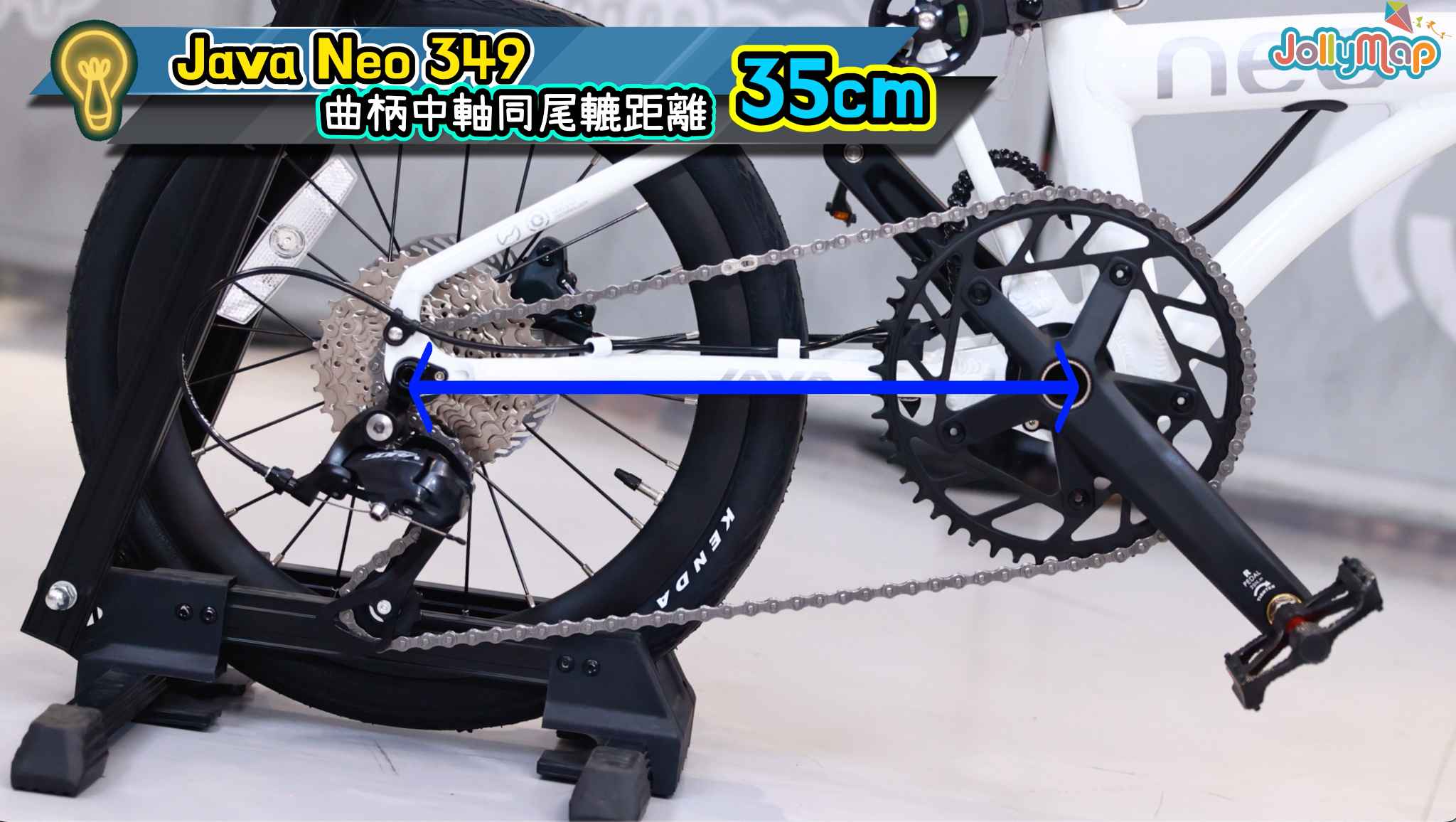
Instead of a small rear-triangle pivot, Neo rotates around the same centre as the bottom bracket using two large metal rings. This increases contact area and stiffness. On the 16-inch, the bottom bracket to rear-wheel distance is about 35 cm, compared with about 41 cm on a reference three-fold. Starts feel more direct, but early bikes had no suitable rear rack.
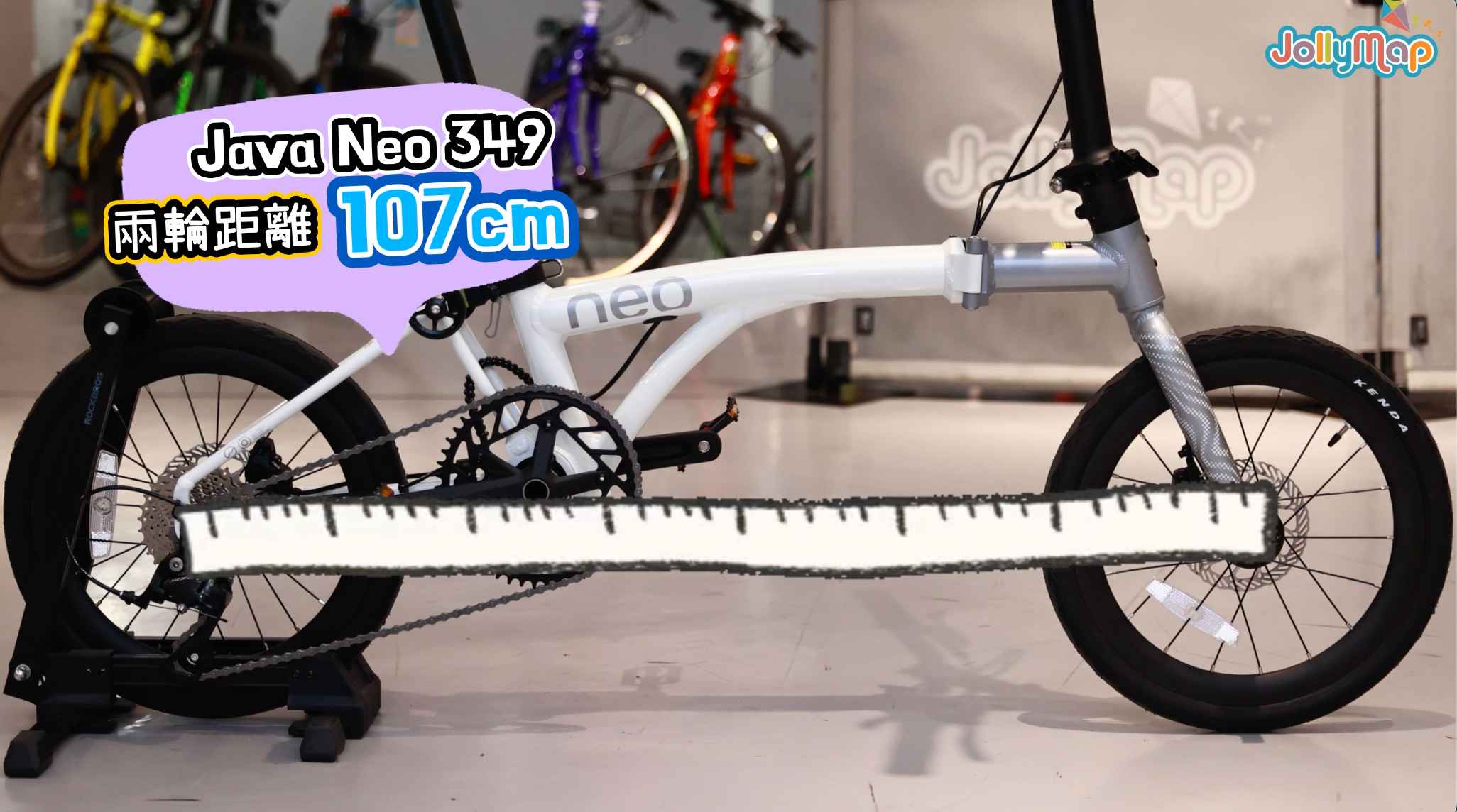
The bottom bracket sits behind the seat tube. A roughly 73-degree seat angle, a relatively straight stem and a wheelbase of about 107 cm keep the riding position from becoming excessively stretched. Jason found the position familiar after riding it. Internal hoses look tidy but take longer to service.
Which wheel size should I choose?
14-inch: best for minimal storage, flat family rides and compact folding. 16-inch 349: best for MTR use, car boots and the widest choice of specifications. 20-inch 406: best for a higher riding position, longer rides and straight-line stability. Start with storage and transport needs before looking at a height chart.
The 14-inch folds to about 59 × 55 cm and weighs about 9.37 kg. The 16-inch nine-speed is about 10.2 kg and folds to about 69 × 30.5 × 59 cm. The 20-inch bar is about 100 cm high, the 16-inch about 92 cm. The 20-inch's folded size, especially with pedals, can exceed the MTR's 170 cm total-dimension limit.
Is the 14-inch a good basis for a multi-speed conversion?
Not usually. Its rear centre is about 25 cm, bottom bracket about 24 cm and wheelbase about 94 cm. The shorter rear helps starts, while the low bottom bracket and longer wheelbase support stability. The stock saddle reaches about 88 cm at the minimum-insertion line, so taller riders may need a longer seatpost.
The three-speed suits flat routes. The five-speed electronic model adds a carbon fork and a 19T largest sprocket instead of 17T. Its 125 mm rear spacing and angled chainline make home multi-speed conversions prone to rubbing and chain drops.
Why is the 20-inch not just a bigger 16-inch?
Its bar is about 100 cm high, and the rear triangle, wheelbase and main frame were revised. The wheelbase is about 109.5 cm rather than 107 cm, and the cranks are 170 mm rather than 165 mm. Many riders will not need an aftermarket riser bar once they try this height.

The 20-inch aluminium model's folded dimensions are about 73 × 32 × 64 cm without pedals. This is close to the MTR limit before pedals are counted. The 16-inch is easier for frequent train journeys, while the 20-inch is more comfortable for longer paths.
What does each specification level actually pay for?
Standard nine-speed: straightforward maintenance and flat-road use. The 16-inch has an 11–32T cassette; the current 20-inch has Shimano CUES and 11–40T. Carbon fork: less front-end vibration, not an easier gear. 12-speed electronic: closer ratios and a 40T climbing sprocket. Full carbon: lower carrying weight, not a different wheel size.
The 16-inch carbon-fork version usually has a 6 cm bar, but this is not a guarantee for the 20-inch. The Wheeltop TX uses buttons instead of a cable, and the factory TX is different from the OX short-cage conversion. The purple edition has carbon bars, stem and fork but an aluminium seatpost, and its four stem-cap bolts should be tightened diagonally with a torque wrench.
What does full carbon add besides the frame?
The 16-inch J Air EX12 uses a T800 main triangle, T1000 rear triangle and hinge reinforcement, with a 6 cm carbon bar. It weighs about 8.35 kg with pedals, around 1.6 kg less than the aluminium 12-speed. The 20-inch J Air has a carbon frame, fork and seatpost, 170 mm cranks and a measured weight of about 8.9 kg. Both still use aluminium wheels.

Do not let a lower weight override the correct size. The 16-inch remains a 349 and the 20-inch remains a 406. A poorly fitting position is not fixed by buying carbon.
Does a bottom bracket behind the seat tube make the bike awkward?
A Bike Fit comparison first set every saddle to 90 cm high. The Neo 16 and 20 measured the same: saddle 154 mm behind the bottom bracket, 634 mm above it, and 65 cm from saddle to bar. The Dahon K3 Plus measured 175 mm and 60 cm, so its saddle was actually farther from the bottom bracket.

If your hands feel overloaded, try a softer saddle or raise the bar slightly to sit more upright. These measurements explain the layout, but a test sit on both sizes is still the best way to choose.
Why should gearing and upgrades be judged with wheel size?
At 80 rpm, calculated top speeds are about 22 km/h for the 14-inch and 28 km/h for the 16-inch with the same 50T/11T combination. In their easiest gears, the figures are about 14 km/h versus 10 km/h. The smaller wheel needs a much larger chainring or cassette to match the bigger wheel, and its frame may not accept those parts.
A 451 conversion on a 20-inch needs the correct 74 mm thru-axle spacing and folded derailleur clearance, not just visible space above the fork. Carbon tri-spoke wheels may save an estimated 200–300 g, but wheel diameter and six-bolt versus Centre Lock fittings must be checked. A front-derailleur mount also needs its adapter, derailleur, double crankset and controls.
What folding and rolling mistakes should I avoid?
Shift onto the largest sprocket before folding so the derailleur moves out of the way. Push the folded bike forwards, not backwards, or the crank may turn and jam a pedal against a wheel. The original 37 mm tyres leave only 1–2 mm of clearance; test any narrower or wider replacement rather than assuming it will roll.

Do not enlarge the easy wheels without testing balance. Do not assume MTR rules apply to buses. And do not buy a higher bar before trying the stock height, especially on the 20-inch or the 16-inch model that already has longer brake hoses.
Common questions
Which is the safest first choice? The 16-inch nine-speed for flat MTR commuting, or a 16/20-inch 12-speed for hills. Are full-carbon wheels included? No, the wheels are still aluminium. Is the purple seatpost carbon? No. Which is best for the MTR? The 14-inch is smallest and the 16-inch is the most versatile; the 20-inch can exceed the total-dimension limit with pedals.
To compare the bikes in person, see our store location and opening hours. For the latest specifications, contact us on WhatsApp.


